


“How long have you done this?”
For years, that question carried useful information. Someone who had recruited engineers for ten years had probably handled more hiring freezes, difficult managers, failed searches, counteroffers, reorganizations, and strange candidate conversations than someone who had started two years earlier. Time created exposure, and exposure slowly became judgment.
AI changes the speed of exposure.
A person can now walk into an unfamiliar topic, ask better questions than they could have formed alone, compare approaches, test an idea, get criticism, rewrite it, simulate objections, and repeat the cycle before lunch. They can study examples that once took weeks to collect. They can build things they previously needed another specialist to build for them.
So I’m becoming less interested in how many years someone has worked and more interested in what happened inside those years.
That sounds obvious until you look at how careers are still organized. Job adverts ask for seven years, promotion systems reward tenure, and pay bands often assume seniority grows in fairly predictable steps. Education still treats learning time as a major input. We keep using the calendar as if a year of professional development were a standard unit.
It isn’t a standard unit anymore.
Five years of what?
Years of experience were already a noisy measure before generative AI arrived.
A 1995 meta-analysis by Miguel Quiñones, J. Kevin Ford, and Mark Teachout examined 44 studies involving 25,911 people. It found that simply spending more years in a job was only a modest predictor of better performance. What mattered more was the actual experience people had accumulated: how much work they had done and how much experience they had with the specific tasks involved.
In other words, five years of doing difficult, varied work may tell you more about someone’s ability than simply knowing they have been in a profession for five years.
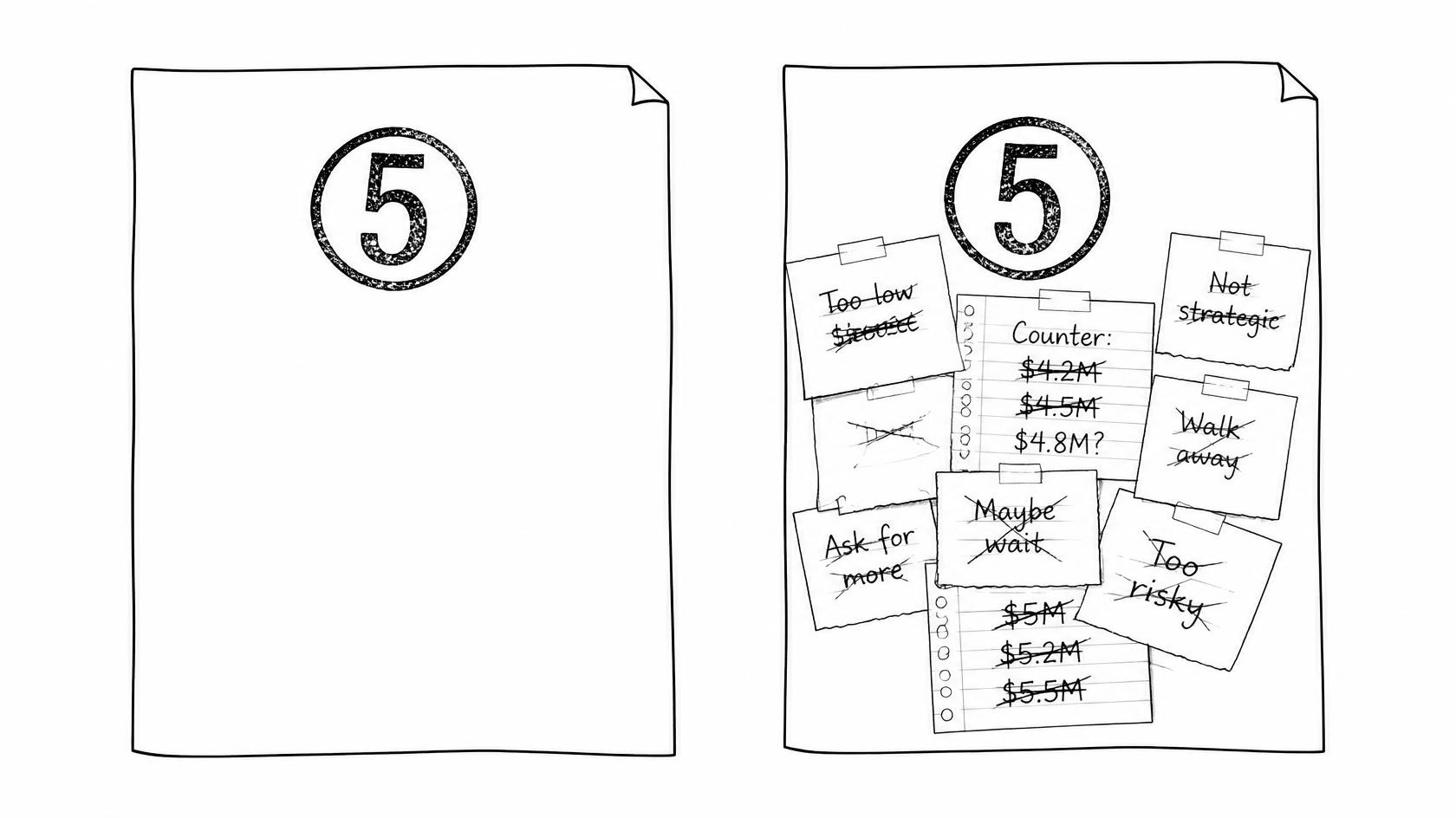
Consider two people with five years in the same profession. One has spent those years repeating a stable set of tasks inside the same company. The other has moved through difficult projects, worked under strong managers, made visible mistakes, taken on work slightly above their level, and kept learning.
Their CVs can show the same number.
Picture a candidate we’ll call Martin. On paper, he looks light. His years don’t match what the hiring manager asked for, and a screen built on tenure would filter him out before anyone reads further.
Then someone talks through what he has actually done.
He has handled situations we would normally expect from someone much further into a career. He has made calls without a template, owned the consequences, and can explain where his decisions failed, which signals he missed, and what he would do differently. He has fewer years than the other candidates, but he is clearly the strongest one in the pool.
This one example proves very little on its own. Still, it changes the question worth asking. What matters is the density of the experience, not its length, even if there is no neat way to measure it.
AI makes that measurement problem harder.
AI compresses the early years
The strongest evidence I’ve seen comes from customer support work.
Erik Brynjolfsson, Danielle Li, and Lindsey Raymond studied 5,179 customer support agents after a generative AI assistant was introduced. Productivity rose 14% on average. For novice and lower-skilled workers, the gain was 34%. Experienced, highly skilled workers saw much smaller gains.
The researchers also found suggestive evidence that the system helped spread the practices of stronger workers to newer colleagues. In plain English, some knowledge that used to travel slowly through coaching, observation, peer feedback, and repeated cases could reach people much earlier.
Read that from a career perspective rather than a productivity perspective.
A junior person can now borrow patterns collected from far more work than they have personally lived through. They can ask for examples, compare edge cases, rehearse a difficult conversation, study unfamiliar regulations, inspect code they could not have written alone, or challenge their first answer before another human ever sees it.
Of course, exposure through a model differs from living through the event. I remember difficult hires because there was a person on the other side, a manager waiting for an answer, a deadline, and occasionally a mistake that was mine. An AI-generated case has no social cost attached to it. That changes what gets remembered.
Still, the amount of practice available in one year has changed dramatically.
I’m cautious about taking short experiments and turning them into grand career predictions. Writing a memo quickly does not make someone a senior professional. Customer support performance does not tell us what happens to a lawyer after ten years or an engineer responsible for a system that fails at 2 a.m.
There is a whole conversation about physical trades that I’m going to leave alone here. I don’t know enough about how this changes the path of an electrician or a surgeon to pretend the same argument transfers cleanly.
For knowledge work, though, the early years can contain far more guided practice than they used to.
Promotion systems still follow the calendar
Companies have a practical problem coming.
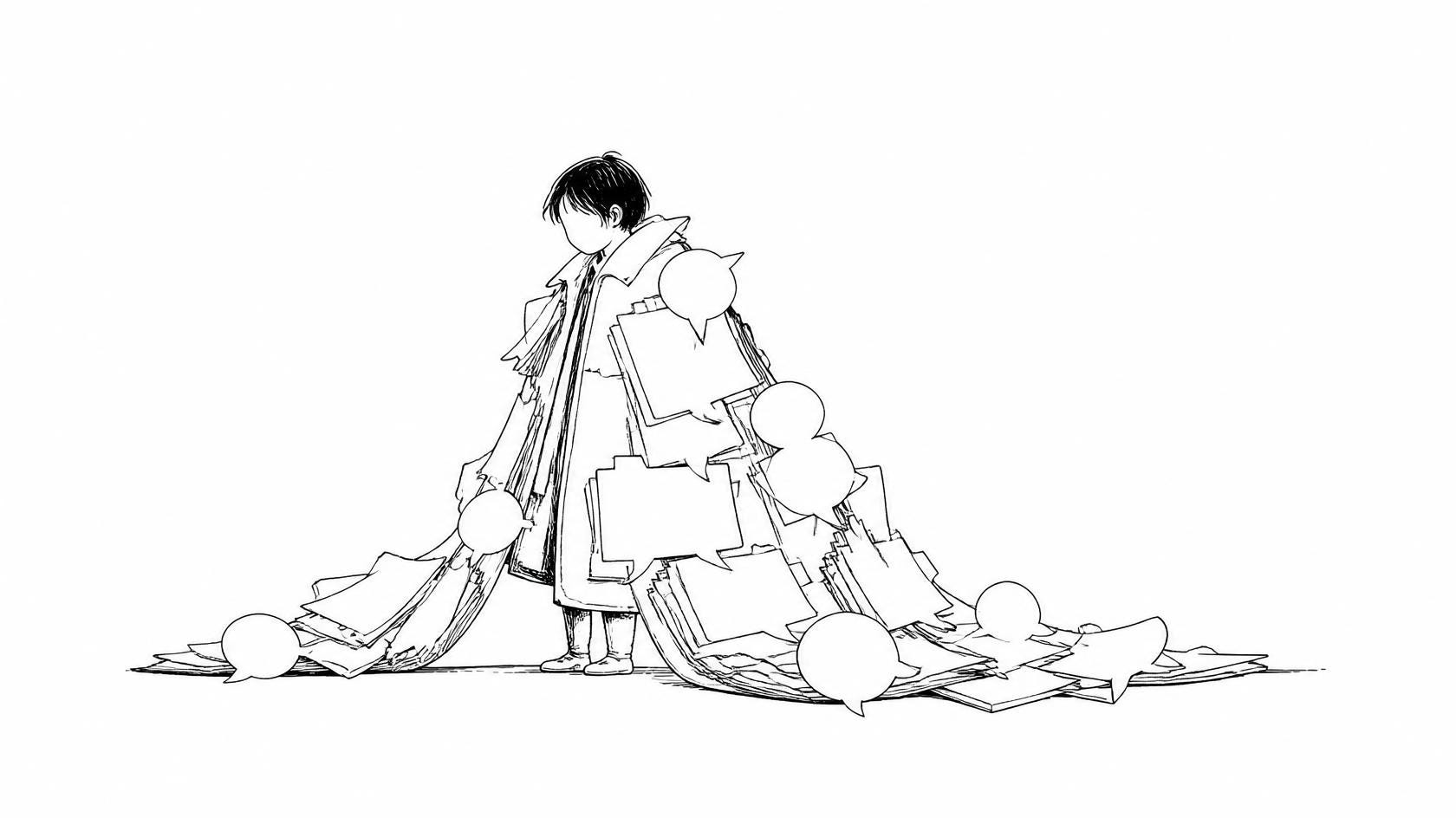
Imagine two analysts. One joined three years ago and uses AI aggressively to learn, test ideas, automate basic work, review their own reasoning, and take on harder assignments earlier. The second has eight years in the field and uses AI mostly to draft emails and summarize meetings.
Which one is more senior?
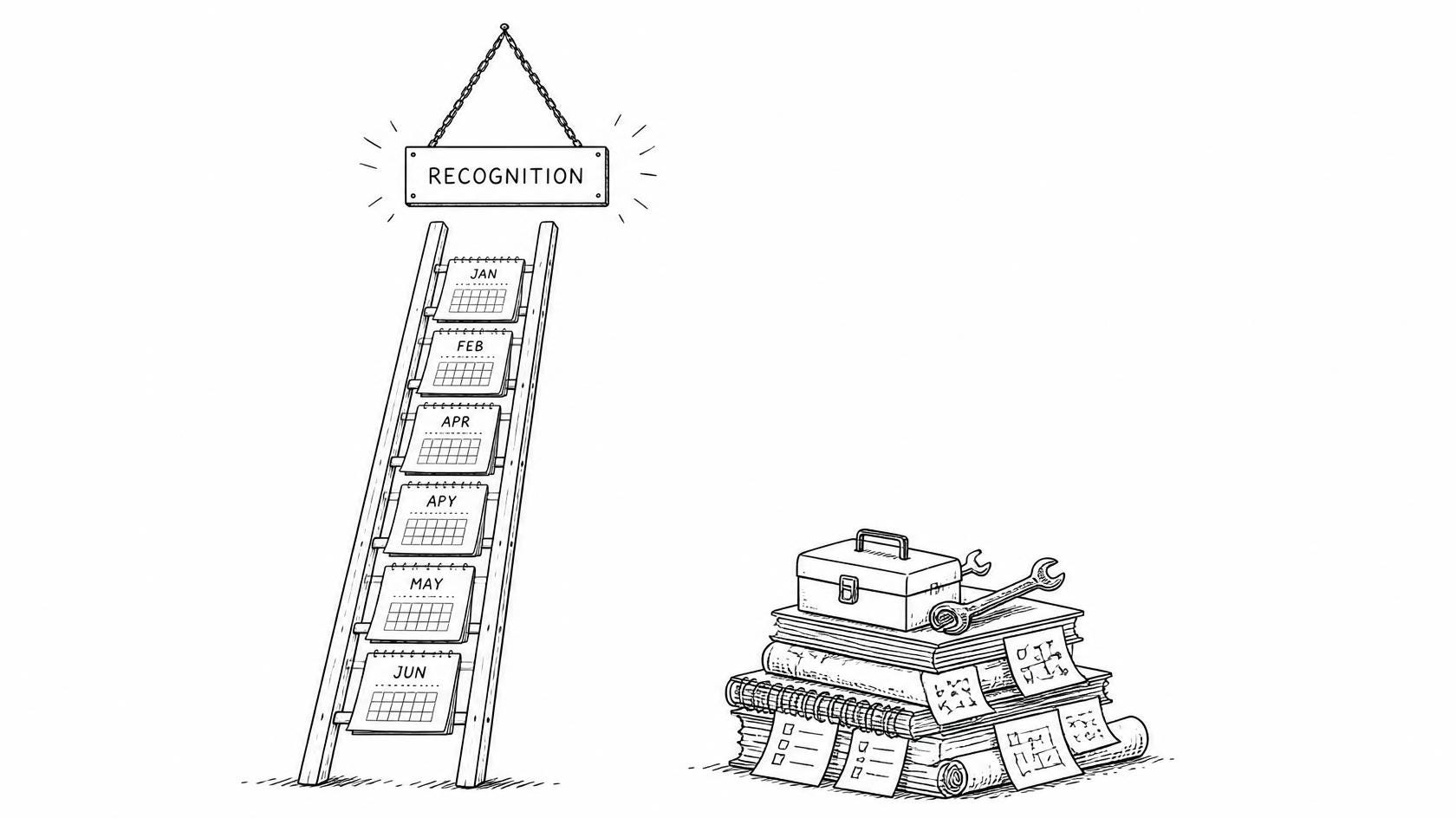
Most companies can answer that question only after they see both people work. Their formal systems still prefer easier signals: tenure, title, previous employer, years in role.
I understand why. Judgment is expensive to assess.
Years are cheap.
You can filter 800 applications by years of experience in seconds. You can put a five-year requirement into a job description without holding a two-hour meeting about what five years is supposed to produce. Compensation teams can create levels that roughly track career stages. Managers can tell employees they need another year before promotion and avoid a much harder discussion about evidence.
That convenience worked reasonably well when learning speed was bounded by access to people, projects, information, and tools.
Those limits are moving.
A year ago, I read a field experiment involving 758 Boston Consulting Group consultants that provides a clear picture of why companies struggle with this and why they will struggle in the future as well. On tasks that GPT-4 handled well, consultants using it completed 12.2% more tasks, worked 25.1% faster, and produced work rated about 40% higher in quality. Lower performers gained more than stronger performers. On a task the model handled poorly, AI users were 19 percentage points less likely to reach the correct answer.
The same tool can narrow a performance gap and create a new error at almost the same time.
For the person building a career, this creates an odd incentive. You can develop faster than the system recognizes you. Your title can lag behind your capability. Your pay can lag behind both. A hiring manager may still reject you because your CV says four years when the role says six.
I’ve been on the other side of that decision, and I know that many recruiters and hiring managers are still using years as a shortcut. It is irritatingly easy. Replacing the shortcut means defining what somebody should have seen, decided, built, fixed, or learned. That takes longer than typing “8+ years” into a requirement.
This is where most organizations will stall. The calendar is administratively convenient.
AI can automate the five-year mistake
There is another hiring issue hiding inside this.
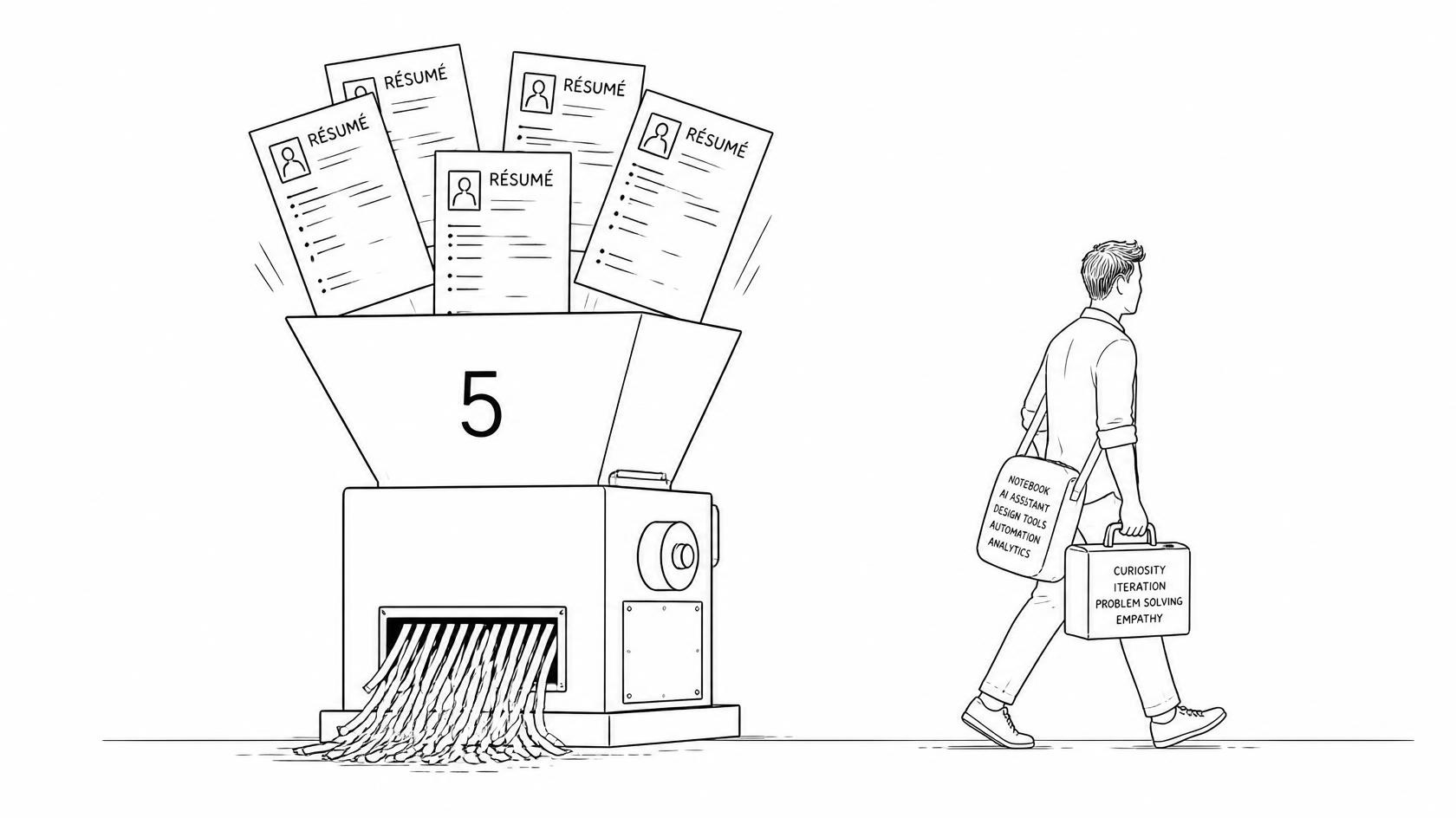
Suppose a hiring manager asks for five years of experience. An AI matching system now has a very clear input. Find people who appear to meet that requirement.
The software can apply that requirement across thousands of candidates far more consistently than an overloaded recruiter could.
Now imagine the strongest candidate has three recent years doing almost exactly the work the company needs. Another candidate has seven years in the profession, although the most relevant part of that experience happened six years ago.
Who gets ranked first?
That depends on the system, and this is where the design choices become important.
Greenhouse says its Talent Matching feature extracts information including skills, job titles, years of experience, employment dates, and company names, then compares candidates with the job criteria recruiters have specified.
So if the requirement starts with “five years,” AI has no reason to question why five was chosen.
It may simply become very good at helping us enforce it.
Other systems show what a better approach could look like. Eightfold describes one matching signal based specifically on skills found in a candidate’s most recent experience. The system can distinguish someone who used a skill years ago from someone actively using it now.
Workday provides another useful example of why the details matter. Its Candidate Skills Match documentation says that particular score does not consider how recently a candidate acquired relevant skills or how long they used them.
AI therefore creates a strange possibility.
We could finally have technology capable of looking past crude career timelines, while still instructing it to search using the same crude timelines.
Imagine changing the hiring request.
Instead of “find me someone with five years of Kubernetes,” ask: “Find people who have recently solved the problems this role will face. Show when they last used the relevant skills, what they were responsible for, and what evidence supports the match.”
Those searches can produce very different candidate pools.
The first automates the calendar. The second asks whether the experience is current and useful.
Hiring managers will have to become much better at defining what they actually need. AI can scale a weak requirement just as easily as a good one. If companies keep feeding systems arbitrary experience thresholds, they may reject highly capable people with greater consistency than before.
And recruiters may never see the people who disappeared from the ranking.
Judgment gets harder to fake
There is also a reason to resist the opposite mistake.
AI can make a person sound experienced before they are experienced.
A polished answer arrives in seconds. The language can be confident. The structure looks clean. The person may even be able to explain a subject they first encountered twenty minutes earlier.
That can fool the person using the tool too.
One study done by the Microsoft Research team surveyed 319 knowledge workers and collected 936 examples of people using generative AI at work. Higher confidence in AI was associated with less critical thinking. Higher confidence in one’s own ability was associated with more critical thinking. Participants described critical thinking shifting toward checking information and deciding how AI output should fit into the work.
That pushes experience in an interesting direction.
Knowledge is becoming easier to access. Judgment may become more valuable because someone still has to decide when the answer is wrong, incomplete, unsafe, politically impossible, or technically elegant and useless.
The senior engineer who has watched a migration fail may notice the assumption hidden inside an AI-generated plan. The recruiter who has closed hundreds of difficult searches may hear the sentence in an intake meeting that means the manager is describing a fantasy candidate. The manager who has fired someone too late may recognize a pattern that a leadership article makes sound simpler than it is.
AI can help analyze each of those situations. It cannot give you the personal history of being responsible when the decision goes badly.
Maybe that changes too, but right now it’s hard to predict what will happen.
If people can simulate thousands of cases, get immediate critique, and review real examples at scale, some forms of judgment may develop earlier than I expect. We have probably underestimated how much expertise came from scarce access to examples rather than the passage of time itself.
There is a cost here for the learner. Fast answers make slow thinking feel wasteful. Checking sources is annoying. Doing the first draft yourself feels inefficient when a model can produce something better-looking in ten seconds. You have to choose where you still want friction, and I don’t think anyone has a reliable answer for that yet.

A manager’s harder question
If you are hiring people, stop asking “How many years?” as the first filter whenever the work allows it.
Ask what the person has actually encountered and did.
What have they built without a template? Which decisions were theirs? Where did they get something wrong and discover it later? What can they do with AI that they could not do two years ago? What can they still do when the model gives them a bad answer?
For hiring, work samples become more useful because they show current capability. In the older research, task-level and amount-based measures of experience related more strongly to performance than time-based measures. AI gives us another reason to care about the work itself.
For promotions, we should look for evidence that someone’s scope has changed. Bigger decisions. Harder ambiguity. More responsibility for consequences. A person who uses AI to reach that point in three years should not automatically wait until year five because the leveling document was written in a slower period.
We’re on shakier ground with compensation. Markets still pay partly for scarcity and negotiating power. Reputation matters too, and AI may change each of those in different directions.
The odd thing is that “years of experience” will likely persist for a long time. It's simple to grasp, easy to record in a spreadsheet, and handy as a rough sorting tool.


