


Open Claude Cowork. Type: “Apply to every product manager role posted in the last two weeks that matches my resume. Here is my resume, cover letter, and list of answers to typical questions.” Walk away.
That’s it. No paid tool. No special subscription. No developer skills required. Claude can open job portals, read listings, fill in applications, write tailored cover letters, and hit submit while you’re asleep.
The application used to cost something. Time and mostly the low-grade anxiety of a blank cover letter field, the small act of deciding whether you actually wanted a job before sending your resume into the void. That friction was annoying, and it was also doing real filtering work. It separated people with genuine interest from people who figured “why not.”
That filter is gone. And what’s replaced it isn’t better screening. It’s volume, without the selection that volume was supposed to create.
Sit with that for a second. Not the version of this story where AI is coming for jobs someday in the future. The version where, right now, the act of applying has already been devalued to the point where it says almost nothing about your interest in a role. It says nothing about your fit. It says you had a browser open and knew how to type a prompt.
I ran a coaching session last weekend with a group of job seekers. Several of them were running auto-apply tools around the clock, targeting any remote or hybrid role globally, rotating IP addresses through VPNs to avoid getting flagged as bots.
One person in that group sent over 2,000 applications last month. His thinking was simple: it’s a numbers game, and somewhere in those 2,000 there had to be one company that would write back. Nobody did.
Not because his resume was weak. Not because 2,000 wasn’t enough. Because he needed a visa and relocation. He was optimizing volume on a problem that volume couldn’t solve. The actual blocker was never the application.
This one question that kept coming up on applications: “Do you require visa sponsorship?” They answered no, even when they did need it. Their reasoning was straightforward: they’d figure out the visa themselves, so technically it wasn’t the company’s problem. But it is a company problem and this only shows why some knockout questions stopped working.
The cost of applying just hit zero
For most of its hiring history, applications had a built-in filter. Filling out a form took several minutes. Writing a cover letter took an hour. Customizing a resume meant you actually had to read the job description. The effort was a weak signal, not a strong one, but it existed. If you applied somewhere, you had at least made a decision to apply.
LinkedIn’s Easy Apply changed some of that around 2019. One click, profile attached, done. Application volumes started climbing. Recruiters started complaining. But even Easy Apply required a human hand to click. Some intention survived.
AI removed intention from the equation.
When you can instruct a model to apply on your behalf across dozens of roles with no input beyond your resume and a general preference, the act of applying stops meaning anything at all. I don’t say this to be judgmental about the people doing it. The job market is brutal right now, and if a system can be gamed at zero cost, people will game it. What I’m pointing at is what happens to any system when its cost drops to zero: it gets flooded. The signal collapses.
A talent director at a mid-sized tech company told me in January that they received over 2,400 applications for a senior data analyst role in eight days. She asked me not to name the company. Their previous record for that position type was around 100. Same job boards. Same description. The volume multiplied and kept going.
Her team filtered it to 38 candidates using keyword screening. Of those 38, she guessed maybe a dozen had actually read the job description. One applicant, based abroad with no work authorization for the role, had applied to the same reposted listing three weeks in a row. The cover letter confidently named the wrong company.
That’s not an edge case. That’s a representative Tuesday.

Both sides automated
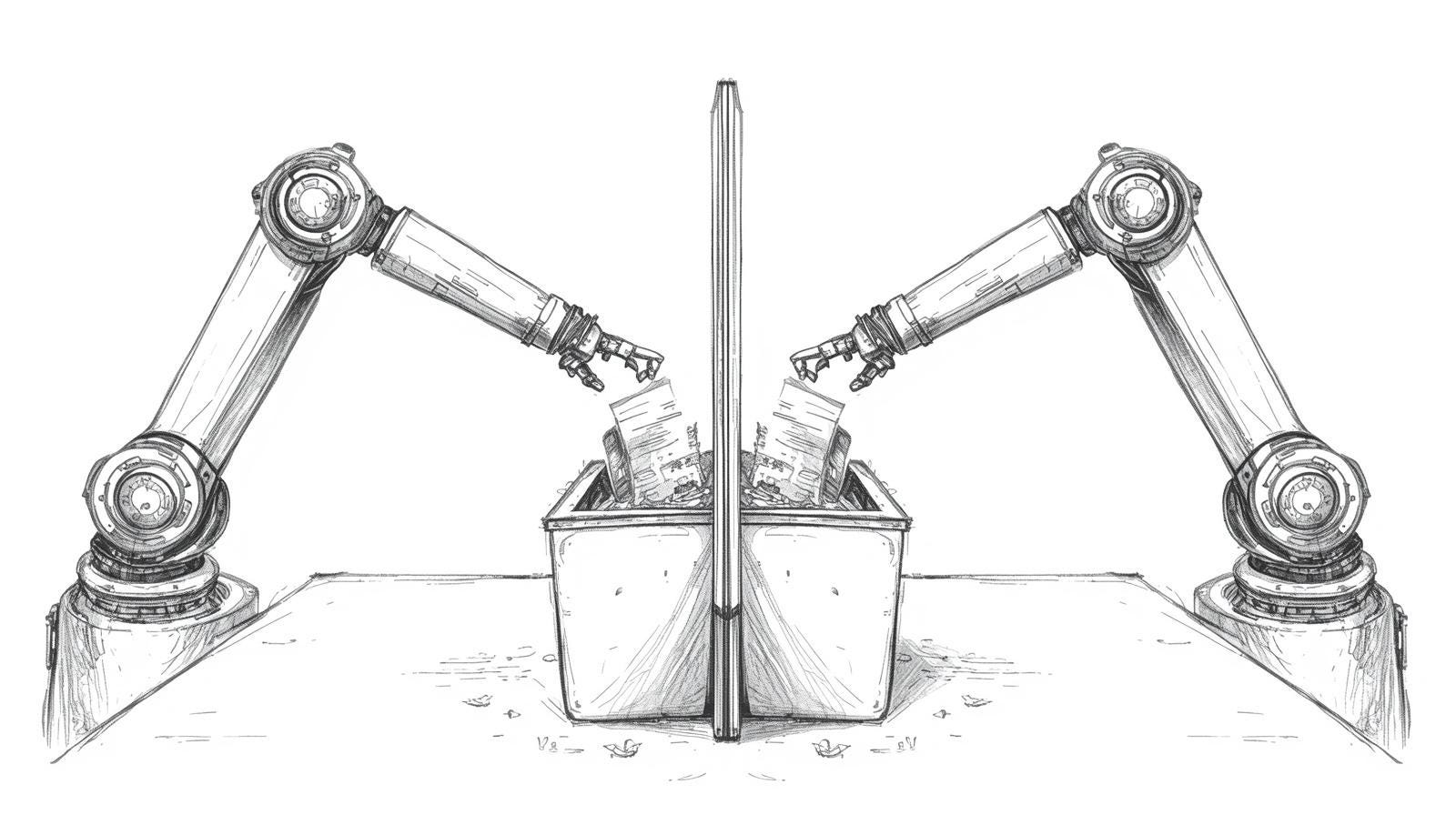
Companies noticed the flood. So they responded with more AI: automated screening tools, knockout questions, behavioral assessments that happen before a human ever sees a name on a resume. Some built custom filters. Some bought third-party products claiming to detect AI-written applications (terrible idea if you ask me).
Some companies are now using AI to screen candidates and then posting on LinkedIn about how fair their hiring process is. What they don’t realize is that if their AI filter is flawed, they’re just rejecting good candidates faster. Their consistency is not fairness. If the AI consistently penalizes career gaps or non-Western universities, they’ve scaled that bias across every candidate in the funnel. But it’s a great message for candidates about where not to bother applying. Nothing says more about a company’s culture than a LinkedIn post telling everyone they treat candidates like numbers.
This AI vs AI has led to candidates optimizing their resumes for AI, and job descriptions being written for algorithms instead of people. And then we all wonder why the quality of hires isn’t getting better. We’re not fixing hiring. We’re automating the illusion of fixing it.
The signals that used to carry real information have degraded all at once. A well-written cover letter used to suggest care. Following even strange application instructions used to filter out the careless. No typos used to be a small positive mark. All of that can now be produced in 30 seconds. I genuinely don’t know what replaces those signals. I don’t think the field has worked that out yet.
The knockout question trend is a real partial response. Asking applicants to submit a short video or describe a piece of relevant recent work introduces friction that mass applications usually can’t handle. It works, for now. But it’s not a complete answer, and it puts a real burden on candidates who are camera-shy or who simply can’t afford to record ten videos only to never hear back.
And there’s a whole separate conversation about how poorly most applicant tracking systems are configured. That dysfunction predates AI by a decade and is genuinely its own mess.
What referrals actually cost the person giving them
That 70 to 80 percent figure, the one claiming most positions are filled through personal connections, gets cited constantly. I’ve never found a study behind it that I actually trust. It circulates because it’s useful to people selling networking advice, not because anyone audited it carefully. But the underlying reality it points at is real: referrals work, and they work for a specific reason most people skip past.
When you refer someone, you’re not forwarding a resume. You’re attaching your own judgment to their candidacy in a room where your judgment already has standing. If they underperform, you’re the one who vouched for them. If they turn out to be difficult to work with, the people who trusted your read on them will remember that. A referral is a bet, and the person making it has real skin in the game. That’s exactly what makes the signal credible: it’s costly to give, which means it tends to only get given when someone genuinely believes in the candidate.
When the cost of applying drops to zero, application signals collapse. The edge migrates to whoever controls higher-cost signals. The person willing to show up at a hiring event in person. The person who spent a year in a professional community before they needed anything from it. The person whose former colleague sent an unsolicited message to a hiring manager saying “I worked with her for two years and she’s the best person I’ve ever managed.”
I still tell people to optimize their LinkedIn profiles and clean up their resumes, because the resume matters once you’re in a conversation. It rarely gets you there anymore, not through a portal.
What actually helps, and I’ve seen this work: treating a job search like a research project about people rather than a process for submitting documents. Pick a few companies you’d genuinely want to work for. Find out who actually runs the team you’d join, read what they’ve published or posted publicly, and show up at one event where they might be present.
Then send one message, not a template, something that shows you engaged with something they actually put out. That’s a week of real work. It produces more signal than hundreds of applications ever will. The cost is time and real discomfort. Most people won’t do it, which is part of why it still works.

Good recruiters got more valuable right when everyone expected them to vanish
For three years I’ve been watching panels about AI replacing recruiters. Screening automation, scheduling bots, AI-generated job descriptions, skills-matching at scale. The conclusion was usually some version of “recruiters need to adapt or they’ll be irrelevant.”
What’s actually happening is the opposite.
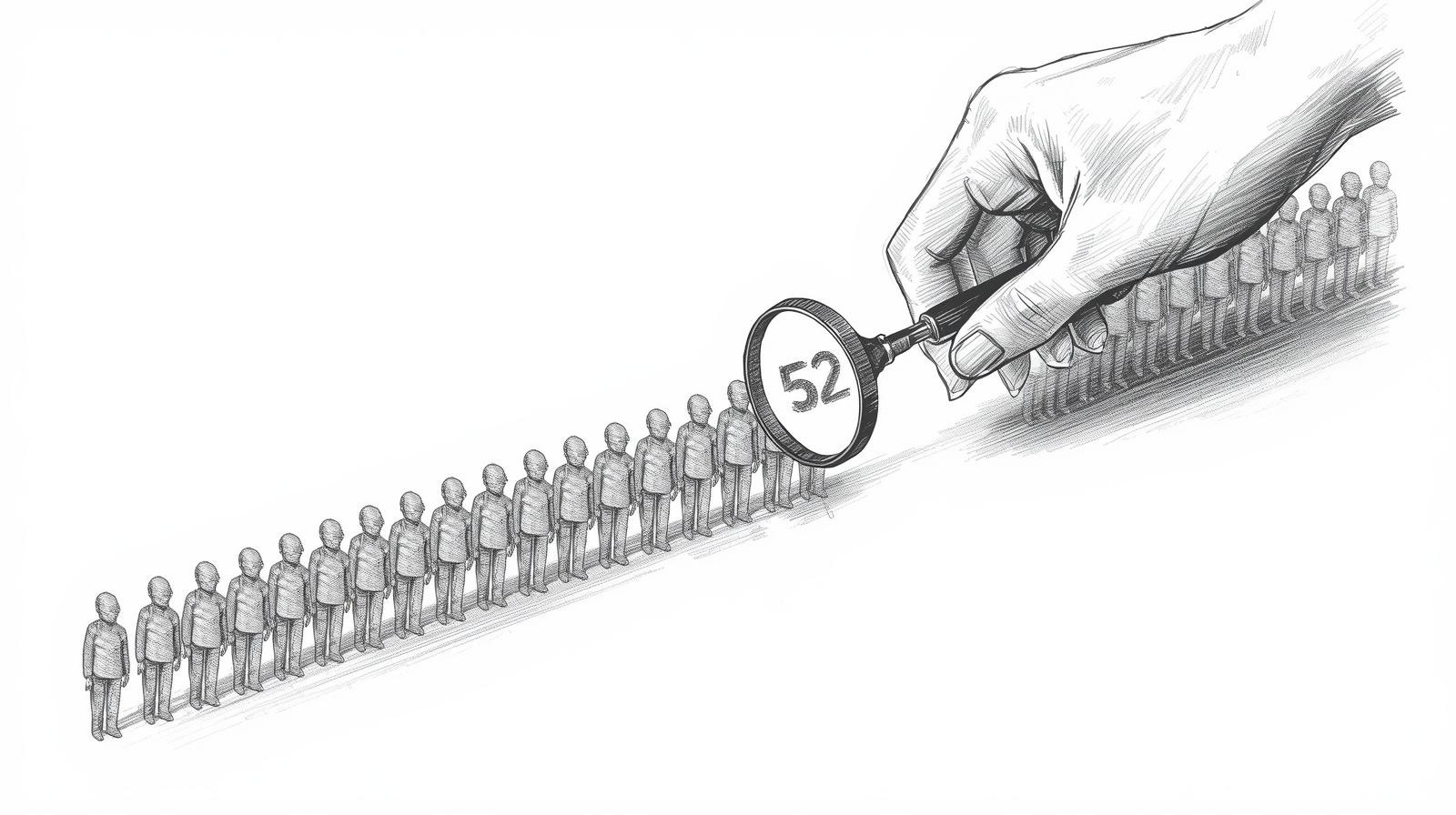
When you have 1,400 applications and an AI that’s nominally ranked them, you still need someone who can look at the top 60 and notice that candidate 52 has a non-linear path making her more interesting than everyone above her on the list. You still need someone who can call a passive candidate who wasn’t looking. You still need someone with enough standing to push back on a hiring manager and say “the job description you wrote is filtering out the people you actually want.” Algorithms return the candidates who most closely resemble what you already thought you wanted, which is frequently not what you need.
The administrative work of recruiting is getting automated. The judgment part, which was always the harder part, is getting more important, precisely because the noise is so loud that you need someone who can hear through it.
The recruiters who’ve adapted are building communities rather than pipelines. They’re showing up in professional Slack groups and Discord servers where the talent they want actually spends time. They’re posting things worth reading, not just job listings, becoming the kind of person a candidate thinks of first when they quietly decide they’re open to something new. That’s a meaningfully different job than reviewing applications after the fact, and most companies haven’t restructured around it yet.
It’s bimodal right now. Some teams are doubling down on inbound and AI screening stacks. Others have basically written off portals for certain roles and told their recruiters to go find people directly. The second group isn’t making a mistake, and I expect more companies will follow them.
What I’m skeptical about is the AI spam-detection tools starting to appear, the ones claiming to identify AI-generated applications and filter them out. They can’t reliably distinguish between a mass-submission from someone who doesn’t know the company exists and a careful application that was polished with AI. A genuinely qualified candidate who used AI to tighten their resume language gets flagged the same way as the noise. Nobody gets a rejection explaining why their AI-polished resume looked the same as the spam. Companies that invest most heavily in that detection will filter out real candidates to stop fake ones, and won’t know they’re doing it. The more you invest in those tools, the worse your candidate pool probably gets.
Where I think this is heading
I wrote a piece (The Job Search Is Broken. Here’s What Could Fix) about two years ago arguing that every company will eventually have an agent(s), and every person will have an agent(s), and those two agents will find each other. Not through a job posting. Through some form of structured, ongoing matching where your agent holds your actual track record, your preferences, your reputation in the market, and the company’s agent knows what the team genuinely needs, not what a job description written by committee says. They negotiate a first conversation before either human has committed to anything.
I still believe that’s coming. There are technical and regulatory problems nobody has fully worked out yet. What data does your agent hold, and who controls it? The matching layer sounds clean in the abstract and will be messy in practice. Whether it reproduces the same bias problems in new forms is something I think about more than I usually say out loud.
In the shorter term: expect more proof-of-work before any human reviews your application. Take-home tasks, short video submissions, project samples. Expect AI sourcing tools to treat your public LinkedIn posts and your published writing as your actual application, whether you filed one or not. Your GitHub matters too, though with the rise of AI-generated code, everyone’s repository is starting to look like a developer’s, which makes that signal harder to read. And expect in-person hiring events, things that felt like relics two years ago, to start mattering again in ways most people aren’t quite prepared for.
My instinct is that the retreat from inbound creates pressure toward local and in-person hiring, because those contexts are where higher-cost signals still function. A conversation at an event, a presentation someone saw, a coffee meeting that eventually turns into a referral. That probably cuts against remote work at the margin, and I don’t think that conversation has fully caught up with what’s happening in hiring. I may be misreading the direction. I don’t have clean data on it.
What I keep returning to is that anyone currently treating portal applications as their primary job search method is playing a game where the rules changed, and the new rules favor people with warm networks. That’s not advice I love giving. Warm networks aren’t equally distributed. Not everyone has spent years building LinkedIn connections or has a colleague willing to put in a good word. The thing that works best right now is the thing that’s hardest to build quickly, and I haven’t found a satisfying answer to that tension.
What I keep coming back to, though, is something someone told me very early in my career. Do your job well. Treat everyone with respect. Help others when you can. Those are your real credentials for whatever comes next. I’ve watched the tools change, the channels change, the whole architecture of how people find work change, and that advice has somehow aged better than almost anything else I was given.
Your reputation in the actual rooms where you’ve worked, among the specific people who’ve seen you handle something hard, is the one signal that hasn’t been devalued. It costs a decade to build and it can’t be auto-filled in a browser tab.
That person was right.
In case you missed it:


