


There’s a specific kind of mental activity that happens at 2 am, or in the shower, or during the nine-minute walk between meetings: you imagine what someone absent thinks of you. Not a person you’re with.
Someone who isn’t in the room. A parent. A former manager. An acquaintance from a previous job who made one mildly critical remark at an offsite and probably forgot about it before the conference room finished clearing out.
You hold a trial in your own head. You play both roles.
The judge has opinions about your career change, your apartment, the degree you didn’t finish, the relationship you stayed in too long. You know the verdict before the judge has spoken because you wrote the script yourself.
I did this for years without recognizing it as a pattern. A decision would surface - a job change, a move, something I wanted to stop doing - and I’d spend days pre-defending it to people who hadn’t asked. Not out of caution. Out of something more reflexive, a rehearsal for a performance nobody had requested.
What took me longer to understand is that the panel I was performing for wasn’t paying close attention. They had their own panels to perform for. The person whose imagined opinion I was managing at 36 probably hadn’t thought about me in months. And I was losing weeks to a conversation that was never going to happen.
Your Imaginary Jury
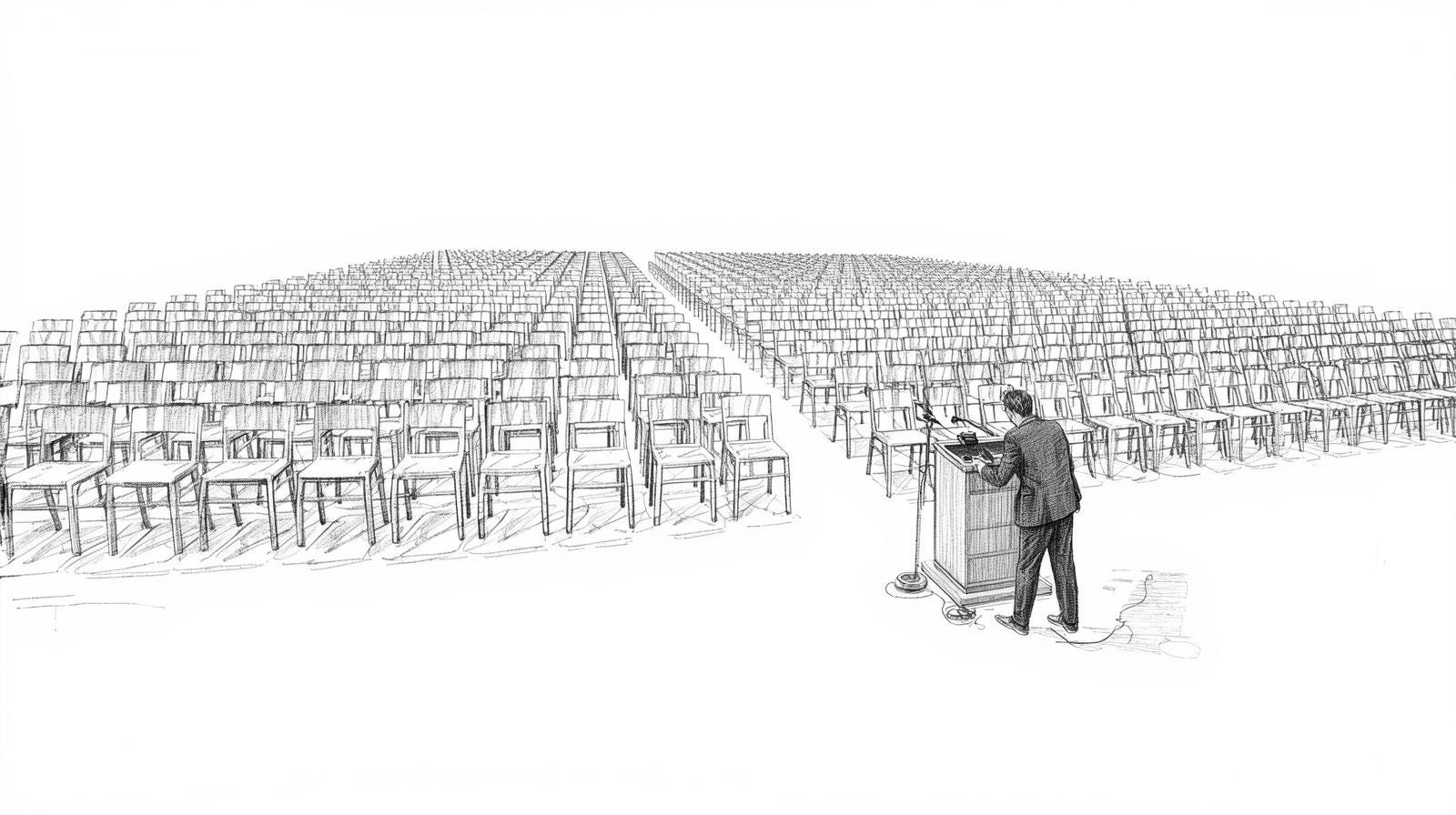
In 2000, Thomas Gilovich and his colleagues at Cornell published one of the more reliably embarrassing findings in social psychology. They asked participants to put on a T-shirt featuring a large, unflattering photo and walk into a room of other people. Afterward, they estimated what percentage of the room had noticed the image. The average estimate was around 50%. When the researchers asked the actual observers, the number was closer to 25%.
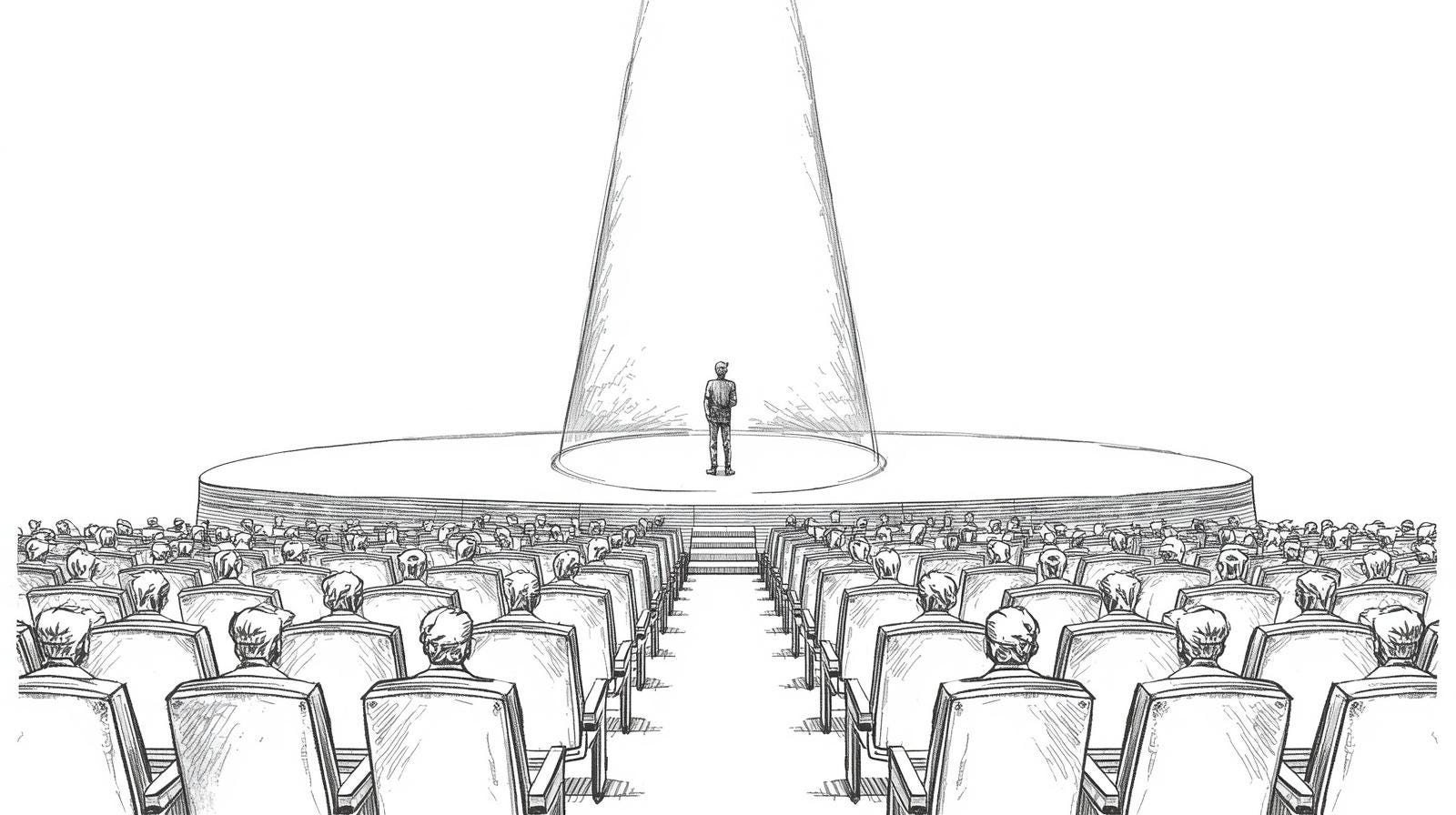
Half the audience they imagined wasn’t watching. The observers were busy with their own performance anxiety, their own imagined spotlights. The light feels blinding from inside it. From outside, it’s dim enough to ignore.
This effect doesn’t limit itself to embarrassing shirts. It shows up in the comment that didn’t land at the meeting, the career pivot you’re afraid to announce, the choice you’ve already made but haven’t told certain people about because you’re not ready for the reaction. You’re estimating the audience size, and you’re overestimating it, reliably, by roughly half.
The effect is somewhat smaller in people who’ve practiced compensating for it. I don’t think it goes away fully. I still catch myself writing rebuttals to objections nobody has raised, for decisions I haven’t made yet. The jury reconvenes whether or not there’s a case.
And even when people do notice, they remember for less time than you’d expect. The comment you made at dinner, the one you replayed for four days, the one you were still picking apart Thursday morning, the people who were there filed it away quickly. Not because they’re indifferent to you. Because they have their own accumulated cringe moments waiting for review.
There’s an obvious conversation about social media here that I’m going to mostly leave alone, because everyone is already having it and doing so with varying degrees of evidence. What I’ll say is that the platforms seem to have made the imaginary audience more vivid and harder to ignore, which is different from creating it. The jury was always there.
How It Gets Into Every Choice
The real problem with organizing your life around imagined judgment isn’t psychological discomfort, though that’s real enough. It’s that the judgment becomes a silent filter on decision-making without ever declaring itself. Options fall off the list before you’ve examined them, eliminated by a process you didn’t notice happening.
A project manager I know, I’ll call him Ondřej, which isn’t his name, spent six months sitting on an offer to move into independent consulting in Brno, Czech Republic. He’d been at the same company seven years. The offer paid more, matched his skills better, and aligned with what he’d described wanting since I’d known him. He was drinking vending machine coffee on a Tuesday afternoon, his desk still covered in papers he’d been meaning to sort since the previous autumn, when he told me he was still thinking it over.
He wasn’t deciding. He was imagining. His father had strong opinions about employment stability, formed in a very different economy. His former colleague, named Marek, had once made an offhand comment about freelancers not being serious people. Those were the voices actually running the deliberation. Neither had been consulted. Neither had been asked about this specific situation.
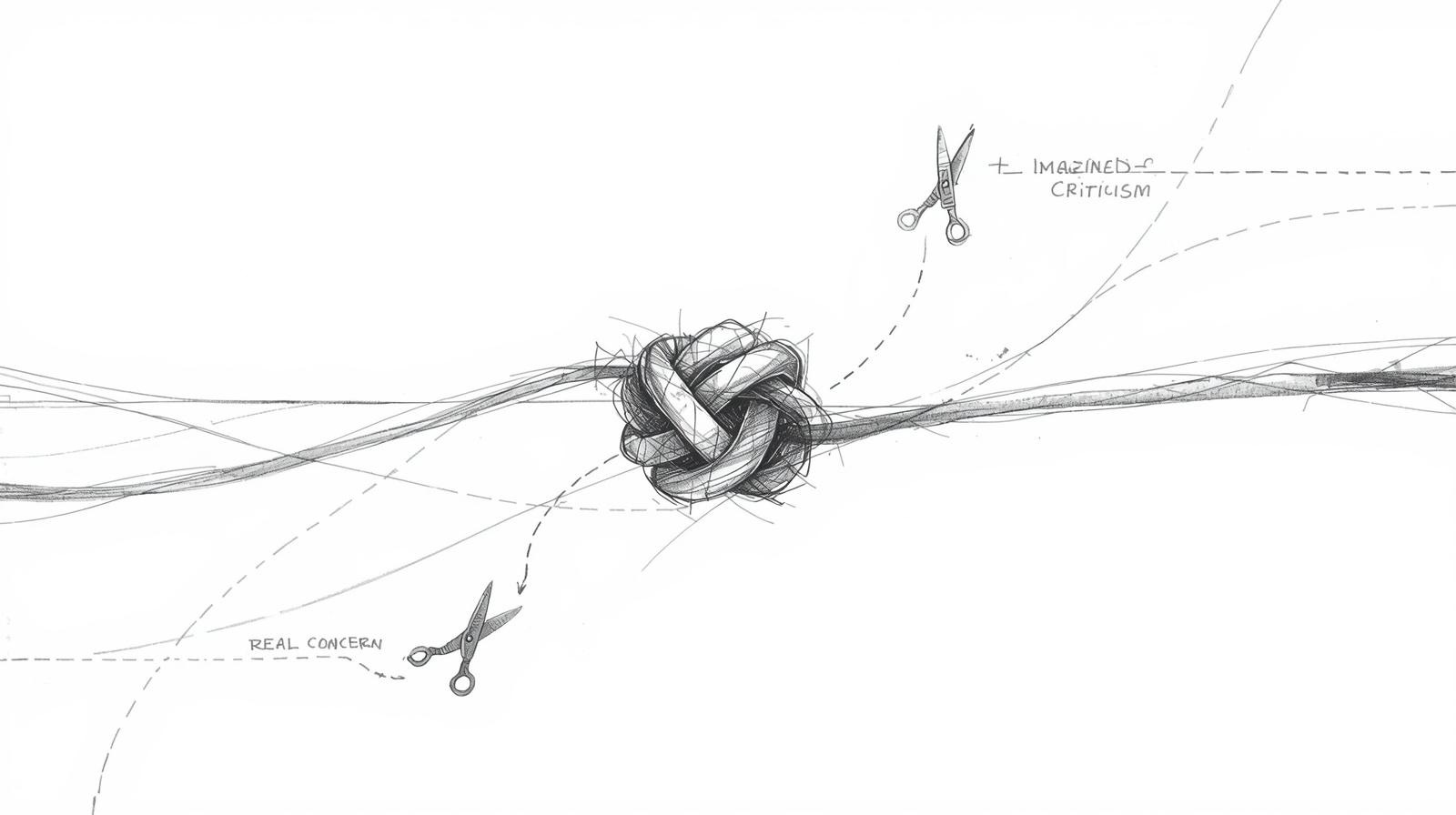
I should say: Ondřej had genuine financial constraints too. A new apartment lease, his partner temporarily on reduced hours. The imagined judgment wasn’t the only obstacle. But when I asked him to separate the actual financial calculation from the imagined reactions, he couldn’t do it cleanly. The two had merged into a single feeling of uncertainty, and he’d stopped trying to distinguish them.
That’s the part that’s hard to see from the inside. Legitimate concerns and invented criticism share the same psychological space. They blur into a general resistance that’s difficult to interrogate because you can’t see its components.
Mark Leary’s work on sociometer theory offers one explanation for why this happens at such a basic level. His argument, developed with Roy Baumeister across several papers in the 1990s, is that self-esteem functions less like a stable internal trait and more like a continuous social monitoring system, a real-time gauge of how accepted or rejected you are by the people around you. The system doesn’t distinguish meaningfully between actual social rejection and anticipated rejection. It responds to both with comparable urgency.
This doesn’t mean you’re unusually needy or constitutionally fragile. It means a monitoring system that evolved for small-group social survival is running in the background of decisions it wasn’t built for. The question is whether you’re going to let it make the call.
Not Every Opinion is Noise
There’s a version of this argument that tips into something I’m not endorsing. The claim that other people’s opinions are uniformly irrelevant, that you should do exactly what you want without reference to anyone else. That’s satisfying to say and nearly useless as guidance.
Some people’s opinions contain real information. A mentor who has watched you work across multiple years, who has seen you succeed and fail at specific things, has data. A colleague who worked alongside you on a difficult project has data. Their view of a direction you’re considering is worth something, if they actually know the territory.
The distinction that matters: is the person whose opinion you’re managing someone with relevant information, or someone you’ve cast in a role without their knowledge?
The parent who hasn’t been close to your industry in a decade, whose frame of reference is mostly what you mentioned at the last family gathering, is not a reliable source for a specific career decision. The acquaintance who made one comment over one dinner is not a source. The imagined composite of “what people will think,” which is what most of us are actually managing, isn’t a source at all. It’s a projection you built and then granted editorial authority over your choices.
There’s also a specific failure mode I’ve watched repeatedly: people seeking approval from people who aren’t paying close enough attention to grant it. They exhaust themselves trying to earn a verdict from someone who has already moved on to other things.
What Happens When You Stop Performing
Gilovich and Victoria Medvec also studied regret, in a separate line of research, and found a pattern worth knowing. In the short term, people tend to regret things they did more than things they didn’t do. Over longer time spans, years rather than weeks, the balance flips. The inactions start to dominate. The things you didn’t do because you were managing someone else’s imagined opinion.
What I’ve actually found useful, and this is from trial and error, not a system, is noticing when the verdict arrives before any evidence does. You haven’t told anyone about the decision yet. You haven’t asked for anyone’s opinion. The disapproval is already there, already running the deliberation. That sequence is worth catching. It means the trial is happening in advance of any testimony.
After noticing: who, specifically, is the judge? Not “people in general.” A name. If you can’t produce a specific name, you’re managing a projection. Projections don’t update based on new information. They hold the positions you gave them.
Most people stop at exactly this point. They recognize the pattern, feel a brief sense of relief, and then a new decision surfaces two weeks later and the jury reconvenes as if nothing was resolved. The insight doesn’t hold. What I’ve found is that it’s not supposed to be durable on its own, it’s more like a recurring check than a permanent installation. You catch it again, and then again after that.
The other thing is delaying consultation with key people on certain decisions until after you’ve formed your own view. Not forever. Just long enough to know what you actually think without their reaction as an input. The people I know who seem most settled in their choices aren’t people who stopped caring about approval, they’re people who tend to gather opinions after deciding, not before. That way, the consultation is advisory rather than constitutive.
This costs something real. Sitting with not knowing what people you care about will think is genuinely uncomfortable for most people. The approval feedback loop was providing something, even when the verdict was invented. Without it, you’re holding the decision in the air.
The Week After You Stopped Caring
You don’t stop caring all at once.
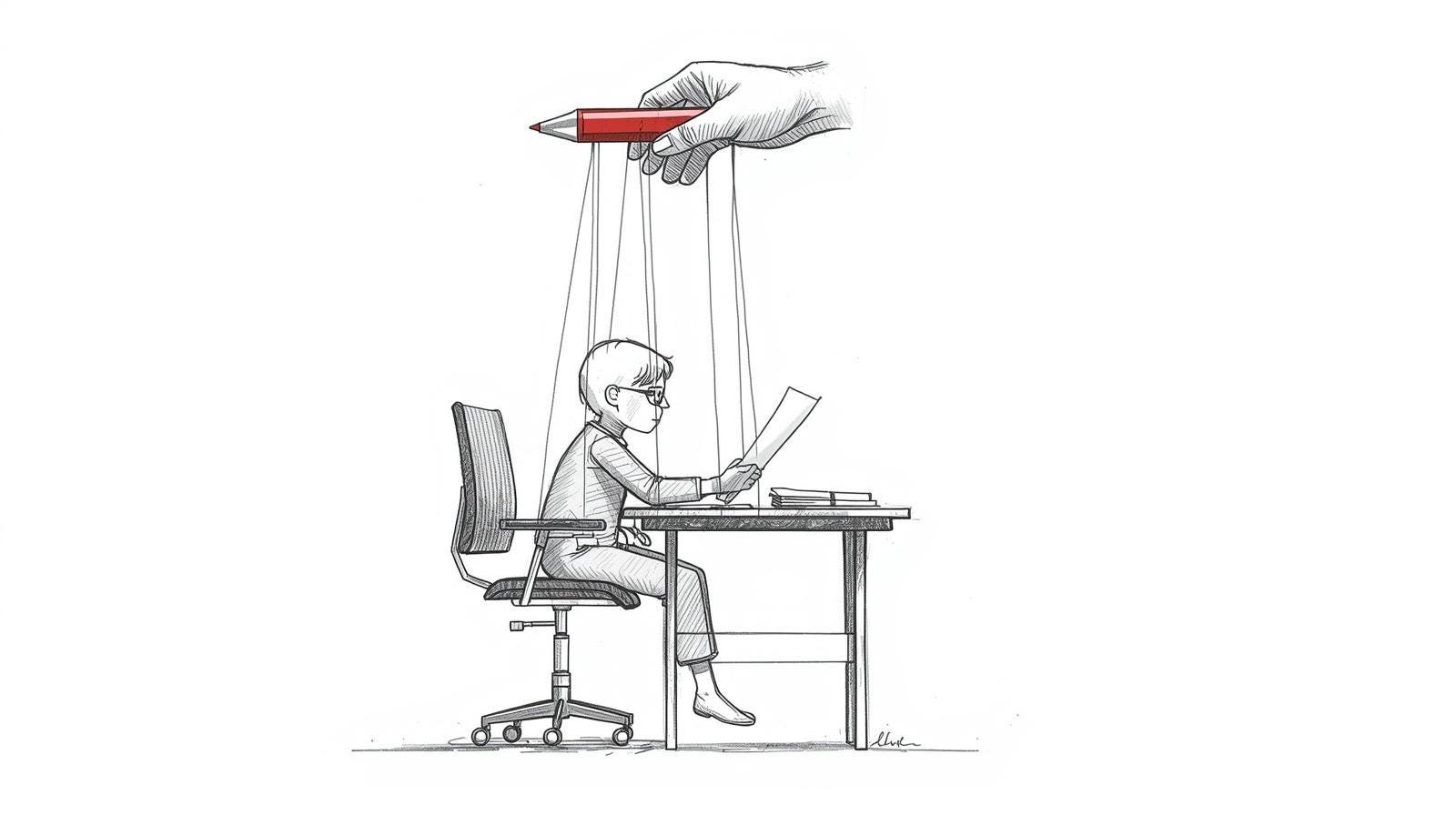
The jury doesn’t disband. You dismiss one juror and two more arrive. The composition shifts over time, inconsistently, and even then the process isn’t finished. What changes is how much the verdict determines what you actually do, not zero, sometimes far from zero, but enough that the next decision doesn’t have to clear imaginary review before you can take it seriously.
Ondřej eventually took the consulting work. Eight months later, not six. He told his father in one text message and didn’t follow up for two weeks. His father was confused for a while, then broadly fine. Marek never came up. He said the strangest part was that he’d spent eight months preparing for a confrontation that turned out to be nothing at all.
I don’t know where his situation is now. I haven’t talked to him in a while, and his story doesn’t end neatly enough for me to use it as evidence of much in particular.
What you find on the other side of letting go of imagined judgment isn’t clarity. It’s the actual decision, with the actual information you have, and the ordinary uncertainty of not knowing how it turns out. The jury was providing something, even when the verdict was invented. Without it, you’re left with the original question.
That’s probably where it should have started. It’s not a comfortable place to be.
The Decision Audit That Separates Real Concerns from Invented Ones
When I notice I’m pre-defending a decision to someone who hasn’t asked, defending it in my own head, to a judge who isn’t present, I run through a sequence of questions. I want to be clear this is not a formal process. I don’t write it down most of the time.
I run through it roughly in order, in my head, when something I’ve been circling for too long finally surfaces as obviously stuck. Here are the questions I am asking:
